
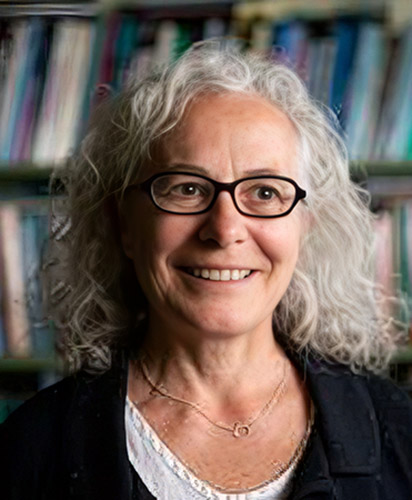
Cecilia Wainryb's work explores how children and adolescents make sense of interpersonal and group conflict situations, especially the types of conflicts in which one or both parties feel hurt or mistreated. She is particularly interested in how the specific ways in which children interpret these experiences both affect their actual behavior in conflict situations and further their moral development. She has studied this process by interviewing children about hypothetical conflict situations (Shaw & Wainryb, 2006; Wainryb, Shaw, Langley, Cottam & Lewis, 2004; Komolova & Wainryb, 2011) and, also, by eliciting children's narrative accounts of their own conflict experiences (Wainryb, Brehl, & Matwin, 2005; Pasupathi & Wainryb, 2010a; Recchia, Wainryb, & Pasupathi, in press; Wainryb & Recchia, forthcoming-a).
"Conflicts that result in harm, hurt feelings, and unfairness are part and parcel of children's everyday lives, and therefore integral to normative moral development. Nevertheless, there are millions of children across the world for whom their everyday social and interpersonal experiences involve much more severe forms of violence and injustice, including murder, torture, forced displacement, and extreme poverty. In current work, I ask how children make sense of such extreme instances of interpersonal and group harm, and how their subjective interpretations of these experiences further - or hinder - their moral development (Recchia & Wainryb, 2011; Wainryb & Pasupathi, 2008; Wainryb & Pasupathi, 2010; Wainryb, 2010). Current studies include groups of children and adolescents displaced by civil war (e.g., in Colombia; Posada & Wainryb, 2008;Wainryb & Pasupathi, 2010) and tribal wars (e.g., in Papua-New Guinea; /_resources/documents/people/wainryb/wainryb-political-violence-and-disruptions.pdf), children from refugee communities relocated in the United States (e.g., from Bosnia; Pasupathi & Wainryb, in preparation), and even groups of children and adolescents who were themselves recruited into armed groups and served as child soldiers (e.g., in Colombia; Wainryb, 2011), as well as children and adolescents living in violent communities in the United States (Wainryb, Komolova, & Florsheim, 2010).
"As I take a developmental perspective on all of these questions, I also consider in my research the possible developmental constraints that might operate on children's understandings of their social experiences. For example, how do 3-year-olds, as compared to 10- or 15-year-olds, make sense of conflict situations in which they are directly involved? How do differences in their social-cognitive abilities, narrative abilities, and theories-of-mind affect their understandings? (Wainryb & Brehl, 2006; Pasupathi & Wainryb, 2010b).
"Finally, it is important to consider that whenever children make sense of their experiences with conflict, they necessarily engage in negotiations with their culture's available frameworks for interpretation. I have written extensively, from a developmental point of view, against the individualism/collectivism distinction. In my view, that sort of characterization of culture conceals the varied experiences of individuals within cultures, ignores systems of inequality within societies, overestimates the power of culture to dictate meaning, and underestimates the ability of individuals (including children) to make sense of their own experiences. In the research I have conducted in the Middle-East and South-America, I have advocated a shift away from a focus on the cultural patterning of development to a focus on the diverse experiences of persons within their cultures. Such a focus, in my view, acknowledges that cultures are made up of individuals who reflect on their culture's values and traditions, accepting some and rejecting others. It also acknowledges that the ways in which people make sense of their culture's values and traditions are seriously impacted by the power inequalities that are part of most cultures (Wainryb, 2004; Wainryb, 2006; Wainryb & Recchia, forthcoming-b)."
Selected awards & honors
- 2019 University of Utah Distinguished Teaching Award, University of Utah
- 2017 Research Travel Award, Center for Latin American Studies, University of Utah
- 2017 Superior Teaching Award. College of Social and Behavioral Science, University of Utah
- 2016 Milstein Visiting Fellowship for Senior Scientists. Buenos Aires, Argentina
- 2014 Rockefeller Foundation Writing Residency. Bellagio Center, Italy
- 2013 Milstein Visiting Fellowship for Senior Scientists. Buenos Aires, Argentina
- 2006 Superior Research Award. College of Social and Behavioral Science, University of Utah
- 2005 APA Fellow, Division 7
Selected publications
- Recchia, H., & Wainryb, C. (Eds.) (2021). Revenge across childhood and adolescence. CambridgeUniversity Press.
- Budwig, N., Turiel, E., & Zelazo, with Carlson, S. (Cognitive Development), Wainryb, C., & Nasir, N., (Social Development) & Nelson, K. (Language Development) (Eds.) (2017). New perspectives on Human Development. Cambridge: Cambridge University Press.
- Kerig, P. K. & Wainryb, C. (Eds.). (2014). Trauma, psychopathology, and resilience among child soldiersaround the world. New York: Routledge.
- Wainryb, C., Brehl, B., & Matwin, S. (2005). Being hurt and hurting others: Children’s narrative accounts andmoral judgments of their own interpersonal conflicts. Monographs of the Society for Research in Child Development, 70 (Serial No. 281).
- Booker, J., Fivush, R., Greenhoot, A., McLean, K., Wainryb, C., & Pasupathi, M. (in press). Emerging Adults’ Journeys out of the Shutdown: Longitudinal Narrative Patterns in a College Career Defined by COVID. Developmental Psychology.
- Recchia, H., Wainryb, C., & Conto, L. (2022). Taking a developmental perspective on restorative justice inschools. In G. Velez & T. Gavrielides (Eds.) Restorative justice: Promoting peace and wellbeing. New York:Springer.